English Wine Is Having a Moment
The industry behind those bottles has grown quickly. According to WineGB, using Food Standards Agency figures published in March 2026, the UK had 1,158 registered vineyards and 280 wineries in 2025, with about 4,840 hectares under vine. The warm, dry 2025 season produced roughly 16.5 million bottles, up 55% on a smaller 2024 harvest. Harvests swing a lot with the weather, which is worth remembering when you see a single year's figure quoted.
Most vineyards are in the south-east of England, especially Kent, Sussex and Hampshire, where chalk and greensand soils resemble those of Champagne. There are growing pockets in Essex, the Thames Valley, Cornwall, Herefordshire and Wales. About two-thirds of production has traditionally been sparkling, made by the same bottle-fermented method as Champagne, though still wines, especially Bacchus and Pinot Noir, are catching up.
Why England? Why Now?
The Chalk Connection
The chalk soils of the South Downs — running through Sussex, Hampshire, and Kent — are geologically identical to those in the Champagne region of France. The same Cretaceous-era chalk that gives Champagne its minerality and finesse exists in abundance across southern England.
Climate Change
This is one of the few industries where climate change has, so far, been a net positive. Average growing-season temperatures in southern England have increased by approximately 1°C over the past 30 years, pushing them into the range that Champagne enjoyed in the 1980s and 1990s — the golden era of Champagne quality. The same grapes (Chardonnay, Pinot Noir, Pinot Meunier) that thrive in Champagne now happily ripen in English sunshine.
Skill and Investment
The pioneers of English wine — estates like Nyetimber, Ridgeview, and Chapel Down — invested in proper equipment, hired trained winemakers (often from Champagne itself), and committed to the traditional method of sparkling wine production. The results followed.
The Best English Sparkling Wines
English sparkling is the flagship. Made in the traditional method (the same as Champagne — second fermentation in the bottle, extended lees ageing), the best examples are genuinely comparable to mid-range Champagne, often at half the price.
Must-Try Bottles
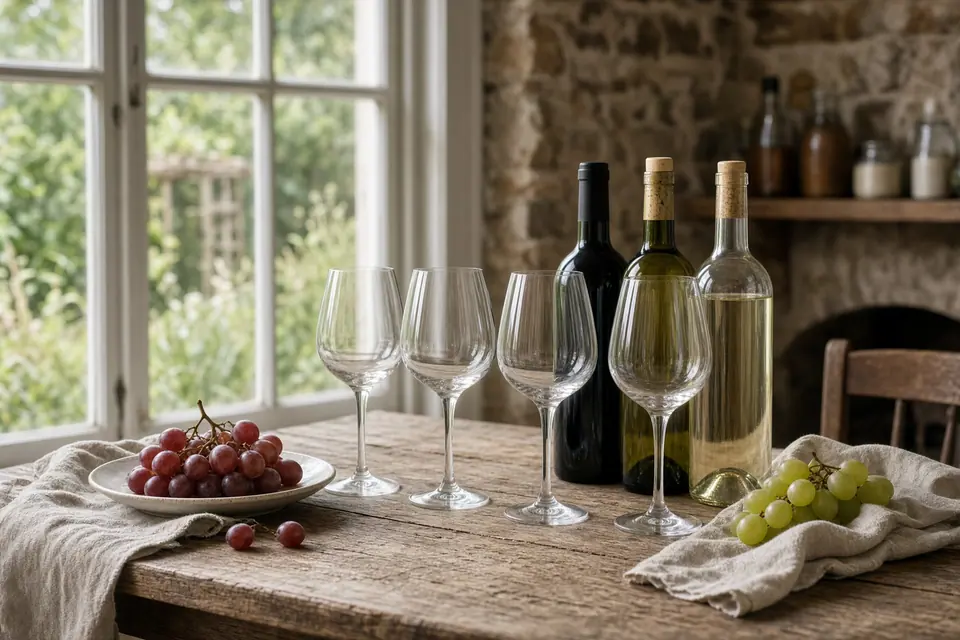
| Wine | Producer | Region | Price | Notes |
|---|---|---|---|---|
| Classic Cuvée | Nyetimber | Sussex | ~£28 | The benchmark. Apple, brioche, fine mousse. Consistently world-class. |
| Blanc de Blancs | Gusbourne | Kent | ~£35 | 100% Chardonnay. Precise, citrusy, elegant. |
| Brut NV | Chapel Down | Kent | ~£20 | Excellent entry point. Crisp, green apple, great value. |
| Blanc de Noirs | Wiston Estate | Sussex | ~£28 | Red-fruit richness from Pinot Noir. Unusual and delicious. |
| Brut Reserve | Hattingley Valley | Hampshire | ~£25 | Creamy, toasty, refined. Their winery also makes wines for 40+ other English estates. |
| Brut | Hambledon | Hampshire | ~£30 | Britain's oldest commercial vineyard. Classic, restrained style. |
| Rosé Brut | Ridgeview | Sussex | ~£27 | Delicate pink, red berries, perfect for celebrations. |
| Brut | Exton Park | Hampshire | ~£25 | Chalk-driven minerality, very Champagne-like. |
Still Wines: England's Other Story
Sparkling gets the headlines, but English still wines are increasingly impressive — particularly the whites.
Bacchus: England's Signature Grape
Bacchus is what Sauvignon Blanc is to New Zealand — it's become England's calling card. Aromatic, elderflower-scented, herbaceous, and refreshingly crisp. It thrives in the English climate and produces wines that taste uniquely of this country.
Try: Denbies Bacchus (Surrey, ~£12), Bolney Estate Bacchus (Sussex, ~£14), Three Choirs Bacchus (Gloucestershire, ~£11).
Pinot Noir
As the climate warms, English Pinot Noir is becoming increasingly viable as a still red — light, elegant, Burgundy-esque. It's still rare and often small-production, but the quality trajectory is exciting.
Try: Gusbourne Pinot Noir (Kent, ~£30), Bolney Estate Pinot Noir (Sussex, ~£18).
Chardonnay
English still Chardonnay — both oaked and unoaked — is a quiet revelation. Cool-climate elegance, bright acidity, and genuine complexity.
Try: Chapel Down Kit's Coty Chardonnay (Kent, ~£22), Gusbourne Chardonnay (Kent, ~£25).
Welsh Wine: The Quiet Revolution
Wales has a small but passionate winemaking scene, concentrated around the south and the Wye Valley. The climate is marginal, which means producers have to be selective about varieties and vintages — but when it works, it's brilliant.
Key Welsh Producers
- Ancre Hill (Monmouthshire) — biodynamic viticulture, exceptional sparkling wine, and increasingly impressive still whites. Their Blanc de Blancs (~£28) is superb.
- Llanerch Vineyard (Vale of Glamorgan) — one of Wales's oldest vineyards. Produces a range of still and sparkling wines, plus a vineyard restaurant and hotel.
- White Castle (Monmouthshire) — small-production, award-winning Pinot Noir and Siegerrebe.
- Parva Farm (Monmouthshire) — a tiny vineyard making surprisingly complex wines from Triomphe and Rondo grapes.
Visiting: The Best UK Vineyard Experiences
Wine tourism is booming in England and Wales. Many vineyards offer tours, tastings, and restaurants — some are genuinely outstanding days out.
Top Vineyard Visits
| Vineyard | Location | Experience | Price |
|---|---|---|---|
| Nyetimber | West Sussex | By appointment only. Intimate tours, stunning grounds. | From ~£35pp |
| Chapel Down | Tenterden, Kent | Large visitor centre, restaurant, shop. Walk-ins welcome. | Tours from ~£15pp |
| Ridgeview | Ditchling, Sussex | Tasting room with South Downs views. Relaxed, knowledgeable. | Tastings from ~£15pp |
| Denbies | Dorking, Surrey | England's largest vineyard. Train tour, tastings, gallery. | Tours from ~£12pp |
| Gusbourne | Appledore, Kent | Beautiful estate, bookable tours and picnics. | From ~£20pp |
| Camel Valley | Bodmin, Cornwall | Cornwall's flagship. Bob Lindo's tours are legendary. | Tours from ~£15pp |
| Llanerch | Vale of Glamorgan | Vineyard + restaurant + hotel. A full Welsh wine experience. | Tours from ~£15pp |
| Hattingley Valley | Hampshire | Working winery tours — see the production side. Fascinating. | From ~£20pp |
Planning a Vineyard Day
- Book ahead — most vineyards require reservations for tours.
- Designated driver — or use the train. Many Sussex and Kent vineyards are accessible by rail from London.
- Spring and summer — the best time to visit. Harvest season (September–October) is particularly exciting.
- Buy at the vineyard — many wines are cellar-door exclusives, not available in shops.
The Future of English Wine
The English wine industry is on an extraordinary trajectory. Investment is accelerating, quality is improving vintage by vintage, and global recognition is now routine rather than exceptional.
Key trends to watch:
- Champagne houses investing in England — Taittinger has planted vineyards in Kent (Domaine Evremond). Pommery makes an English sparkling wine, Louis Pommery England, in partnership with Hattingley Valley in Hampshire. When Champagne houses buy land and make wine here, it says a lot about how they rate English chalk and a warming climate.
- Red wine potential — as temperatures rise, Pinot Noir and even Cabernet Franc are becoming more viable for still reds.
- Orange and natural wines — a small but growing English natural wine scene, particularly in Sussex and the Cotswolds.
- Exports — English sparkling is now exported to over 30 countries, including France. The symbolism is delightful.
English Wine Is Having a Moment — the rise of British winemaking. Part of Carafe.
Regional visit notes (Sussex, Kent, Essex, Wales)
Sussex is central to sparkling tourism — book tastings, limit estates per day, keep bottles out of hot boots. Kent/Essex add depth beyond headlines; call ahead. Wales can surprise with fresh cool-climate bottles; distribution may be patchy, so independents and cellar doors matter. Buy what you would reorder, not souvenir cases you will forget.